

<Back
EFIG provides “Misr Petroleum” with a smart card system responsible for distributing fuel quota
Corporate
Partnerships & Agreements
Sustainability
EFIG signed an MOU to provide Misr Petroleum, one of the companies in the Egyptian petroleum sector, with a smart card system to distribute fuel quotas to its contractors, to replace the “coupons” system that is currently being used, as part of Misr Petroleum's efforts to develop its working mechanisms and within the efforts of the two parties to enhance the digital transformation strategy implemented by the state in all sectors.
Related News
eFinance Signs Cooperation Protocol with the State-Owned Enterprises Unit to Host and Operate the Digital Infrastructure of the “Rasheed” Platform
As part of its role as a national partner in supporting the state’s digital transformation, eFinance, signed a cooperation protocol with the State-Owned Enterprises Unit, affiliated with the Cabinet of Egypt, to provide hosting and digital infrastructure operation services for the “Rasheed” Platform, the national platform dedicated to cataloguing and classifying companies owned by the state or in which the state holds a stake.The protocol was signed by Eng. Hossam El Goly, Chief Executive Officer of eFinance, and Dr. Hashem El Sayed, Assistant to the Prime Minister and Chief Executive Officer of the State-Owned Enterprises Unit.Under the protocol, eFinance will provide secure and advanced digital infrastructure, including hosting services, secure storage capacity, and the computing resources required to operate the artificial intelligence applications of the “Rasheed” Platform. This will help ensure operational continuity, protect government data, and maintain compliance with the highest regulatory and international standards in information security and business continuity.Commenting on the cooperation, Dr. Hashem El Sayed, Assistant to the Prime Minister and Chief Executive Officer of the State-Owned Enterprises Unit, said: “Our cooperation with eFinance marks an important step towards providing secure digital infrastructure capable of supporting the efficient and reliable operation of the ‘Rasheed’ Platform. This ensures the protection of government data and enables the use of artificial intelligence applications to support decision-making and enhance the efficiency of managing the state-owned enterprises portfolio.”This cooperation builds on eFinance’s role in enabling government entities to adopt trusted digital solutions through highly reliable infrastructure that supports the operation of vital national applications. It also contributes to accelerating the state’s digital transformation efforts and enhancing the efficiency of government services.Through this cooperation, eFinance supports the operation of the “Rasheed” Platform, which relies on artificial intelligence technologies to analyse and monitor the financial and operational performance of companies owned by the state or in which the state holds a stake. This enhances data quality, improves the efficiency of portfolio management, and provides decision-makers with accurate and timely information.Eng. Hossam Hanafy Mahmoud El Goly affirmed that signing this protocol reflects eFinance’s continued commitment to providing secure and scalable digital infrastructure to support national projects. He noted that the company continues to invest in the latest technologies and data centres to ensure the highest levels of efficiency and reliability, in line with the state’s requirements for operating strategic applications and protecting data.He added that eFinance continues to support the state’s vision for building an integrated digital economy by providing advanced technological solutions that contribute to developing government performance, strengthening governance, and improving the efficiency of asset and resource management, in support of sustainable development objectives and Digital Egypt’s vision.
eAswaaq Misr signs a strategic partnership with Green Me Limited to accelerate green finance and the transition to sustainable renewable energy
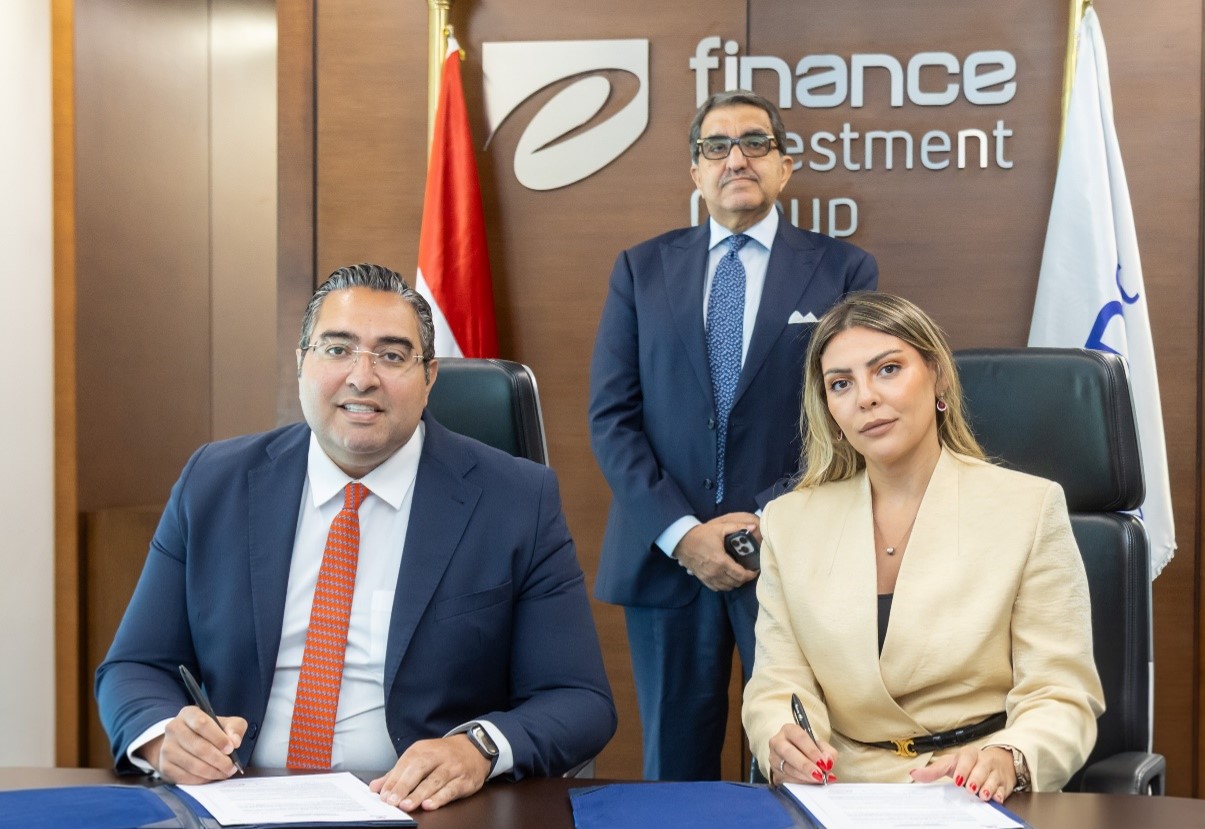
eAswaaq Misr, a subsidiary of eFinance Investment Group, announced the signing of a strategic partnership with Green Me Limited to launch and activate the digital platform “Green Me Egypt” for the industrial and services sectors in the Egyptian market.The platform aims to accelerate digital lending for green and sustainable projects, offering innovative mechanisms to assess the eligibility of projects against clear indicators set by international development institutions. It will connect these assessments to monitoring processes and diverse financing products, contributing to the development of Egypt’s sustainable finance ecosystem.This partnership comes amid Egypt’s rapid strategic transformation toward clean and renewable energy, in line with Egypt Vision 2030 and its international commitments to achieve carbon neutrality. With Egypt’s significant potential in solar and wind energy, the country continues to strengthen its position as a leading destination for climate finance investment regionally and globally.The partnership also seeks to create a qualitative leap in the green finance sector by enhancing transparency, building trust among financial institutions and investors, enabling data driven investment decisions, and accelerating renewable energy project financing while reducing costs. It will also open new international financing channels for green hydrogen and energy efficiency projects.Aliaa Younis, Founder & CEO of Green Me Limited, said: “Aligned with our vision to support the transition to a green economy, we at Green Me Limited believe technology plays a pivotal role in enabling businesses and projects to achieve sustainability frameworks efficiently and transparently. Our partnership with eAswaaq Misr is a strategic step toward building an integrated digital ecosystem that accelerates green finance flows and aligns them with real market needs, supporting Egypt’s sustainable development goals and strengthening private sector readiness for a low carbon economy.”Adel Mubarak, CEO of eAswaaq Misr, stated: “This partnership marks an important milestone in eAswaaq Misr’s journey to support Egypt’s transition to a green economy. Through the launch of the ‘Green Me Egypt’ platform, we aim to harness digital innovation to bridge the gap between finance and sustainability, enabling faster and more transparent funding for impactful projects. We are proud to partner with Green Me Limited in building a comprehensive ecosystem that connects capital with environmental and social value, while opening new horizons for climate finance investment in Egypt.”Ibrahim Sarhan, Chairman & CEO of eFinance Investment Group, added: “This agreement represents a new step in eAswaaq Misr’s mission to help establish a market for small and medium sized enterprises, facilitating access to green finance in full regulatory alignment with the Central Bank of Egypt and the Financial Regulatory Authority.”
eHealth Signs Three Strategic Partnerships During Africa Health ExCon to Advance Healthcare Digital Transformation
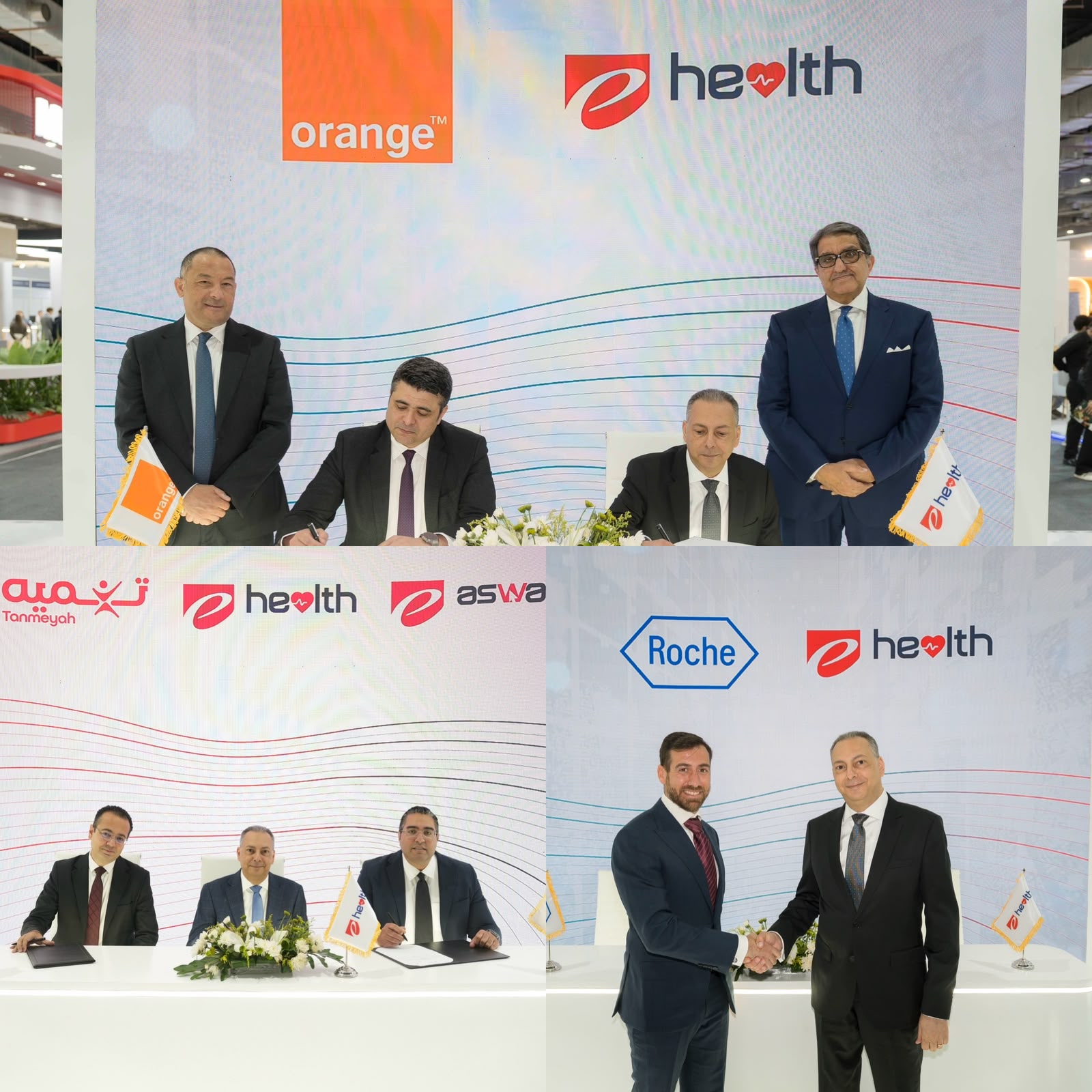
During its participation in the Africa Health ExCon exhibition and conference, eHealth reinforced its commitment to advancing digital transformation across the healthcare sector by signing a series of strategic agreements with leading organizations in healthcare, technology, and financial services. These partnerships align with eHealth’s vision of delivering integrated solutions that enhance healthcare efficiency and empower providers to leverage cutting-edge digital technologies.A key highlight of the event was the signing of a strategic cooperation agreement between eHealth and Roche Pharma Egypt. The partnership aims to support the digital transformation of healthcare facilities and help healthcare providers enhance their readiness to integrate into Egypt’s Universal Health Insurance System. The agreement focuses on improving the patient journey, optimizing referral pathways, standardizing clinical documentation practices, and enabling more effective use of healthcare data in medical decision-making.Under this agreement, eHealth will act as the technology partner by providing the infrastructure through its clinic management platform, “Eyada Plus,” while Roche Pharma Egypt will contribute its scientific and medical expertise to ensure alignment with global clinical standards and best practices.Commenting on the partnership, Stefano Mazzone, General Manager of Roche Pharmaceuticals Egypt, said:"The Egyptian patient is at the heart of this collaboration. We are committed to leveraging our expertise and support to enhance their treatment journey through innovative scientific and digital solutions, ensuring access to smart, seamless, and high-quality healthcare services."In addition, eHealth signed a strategic partnership agreement with Orange Egypt to explore new opportunities for collaboration in digital health, technological infrastructure, and advanced digital services. The partnership aims to capitalize on the combined expertise of both organizations to develop innovative solutions that support healthcare providers and accelerate the pace of digital transformation across the sector, ultimately enhancing service efficiency and improving the overall patient experience.In this context, Eng. Mohamed Shebl, Chief Business Officer at Orange Egypt, stated:"This partnership reflects Orange Egypt’s vision of harnessing technology and innovation to support sectors that have a direct impact on citizens’ lives, foremost among them healthcare. As one of the most vital sectors, healthcare stands to benefit significantly from sustainable technological advancement. We will continue to leverage our expertise as an integrated technology partner to develop digital solutions that improve service efficiency and accessibility."As part of its efforts to support the digital transformation of clinics and medical facilities, eHealth also entered into a joint cooperation agreement with eAswaaq and Tanmeyah for Microfinance. The partnership aims to expand the adoption of the “Eyada Plus” platform and enable healthcare providers to access integrated digital and financing solutions.The agreement is designed to facilitate the adoption of modern technologies within healthcare facilities by combining eHealth’s technical solutions, Tanmeyah’s financing services, and eAswaaq’s financing and marketing platform. This integrated approach is expected to support the growth of the private healthcare sector and enhance its operational efficiency.Commenting on this collaboration, Mr. Adel Mubarak, CEO of eAswaaq, said:"This partnership represents a practical model for integrating technology with non-banking financial services. We aim to empower healthcare providers with the tools and solutions they need to grow and enhance their services. Through our collaboration with eHealth and Tanmeyah, we are working to remove barriers to digital transformation and create sustainable value for the healthcare sector."Reflecting on these partnerships, Mr. Ibrahim Sarhan, Chairman & CEO of eFinance Investment Group, said:"These agreements highlight our strong belief in the importance of strategic partnerships in accelerating the digital transformation of the healthcare sector. Building a more integrated and efficient healthcare ecosystem requires close collaboration among all stakeholders. Through eHealth, we remain committed to developing sustainable collaboration models that deliver real value and support national healthcare development goals."For his part, Mr. Akram Reda, CEO of eHealth, added:"These agreements represent a new milestone in eHealth’s journey to build a connected digital healthcare ecosystem, one that brings together technology, scientific expertise, and financing solutions within a single framework. We believe that collaboration with our partners will accelerate the adoption of digital solutions and deliver tangible improvements in the quality and efficiency of healthcare services."These partnerships underscore eHealth’s ongoing commitment to expanding its strategic network across the healthcare ecosystem, supporting the development of a more integrated and sustainable healthcare system, and enabling providers to fully benefit from digital transformation. Ultimately, this contributes to improving the quality of care delivered to citizens through the effective use of modern technology.